
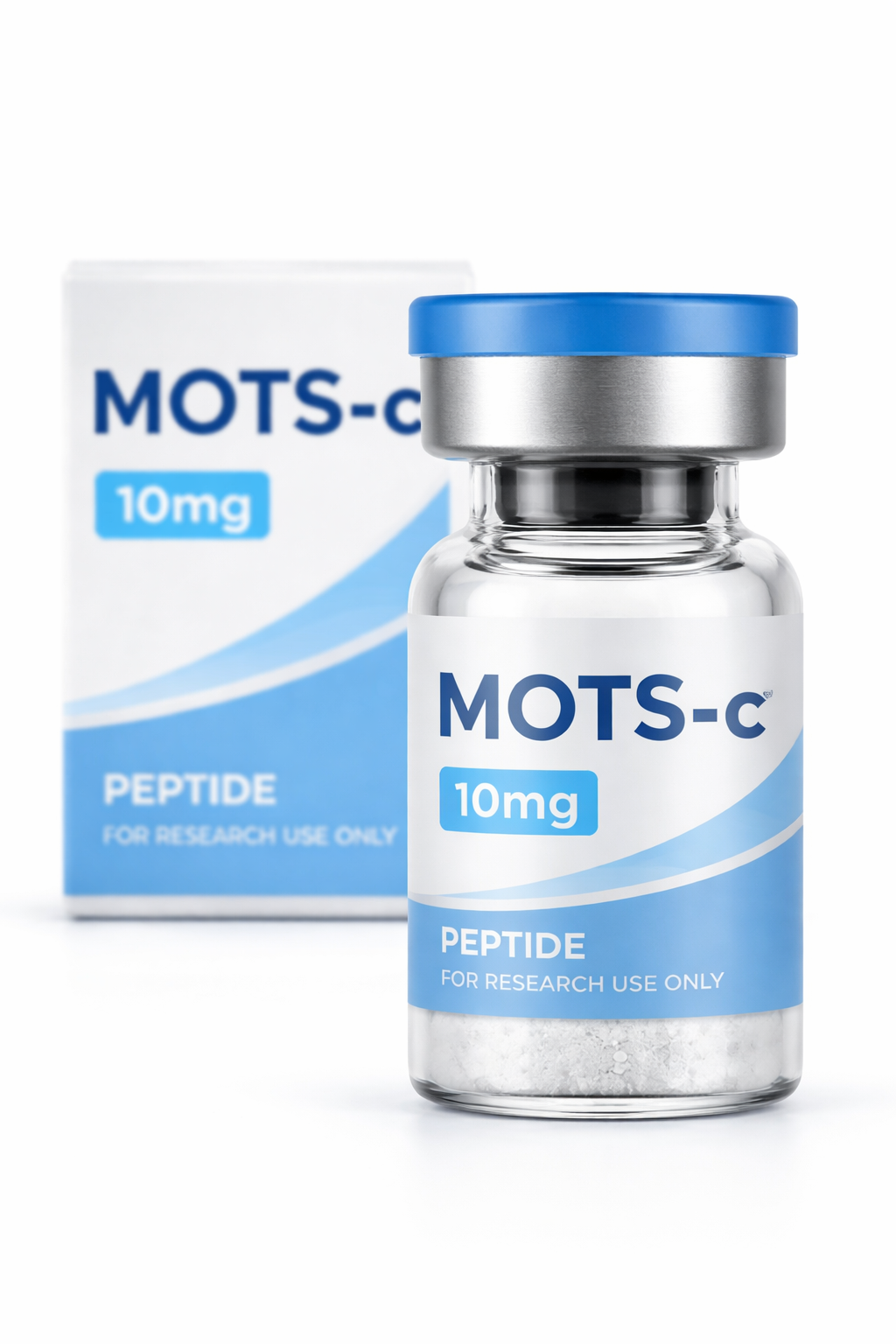
MOTS-C (10mg Vial) Dosage Protocol
The 16-amino acid mitochondrial-derived peptide (MDP) MOTS-c regulates metabolism mainly via activating AMPK. According to preclinical research, it improves exercise capacity, increases insulin sensitivity, encourages fat burning, and reverses age-related metabolic decline. To yet, no human clinical trials have been finished [8]. A once-daily subcutaneous method with moderate titration is presented in this instructional technique. buy mots-c australia
How MOTS-c Works ?
Research indicates that MOTS-c serves as a metabolic signaling molecule that aids in controlling cellular energy balance, while its exact mechanisms are still being investigated.
Metabolic Stress Response
It suggests that MOTS-c activates metabolic stress adaptation pathways. It has been demonstrated in experiments to affect the AMP-activated protein kinase (AMPK) pathway, which is essential for maintaining energy balance.
Glucose and Insulin Regulation
MOTS-c is of relevance in studies pertaining to metabolic diseases and energy balance since preclinical research suggests that it may help enhance glucose consumption and insulin sensitivity.
Nuclear Signaling
The ability of MOTS-c to translocate to the cell nucleus under specific stress circumstances is one of its most distinctive features. Once within the nucleus, it could affect the expression of genes linked to cellular defense and metabolism.
What’s it like to use MOTS-c?
Our well-known medical professionals have shared their understanding of the typical course of a MOTS-c therapy procedure. In the sections that follow, we dissect this protocol.
Dosing and administration
MOTS-c dosages should begin at approximately 5 mg each injection. You can anticipate receiving a month’s worth of reconstitutable powder, bacteriostatic water, and needle syringes, just like with many therapeutic peptides. You should dissolve the powder in the bacteriostatic water according to your provider’s recommendations in order to reconstitute it. Generally speaking, mixing the liquid can break down the peptide. buy mots-c australia
Treatment protocol
Compared to the nearly daily injections you would receive with other peptides, such as CJC-1295, MOTS-c is a twice-weekly medication that appears easier to manage. A morning injection would enable you to benefit from MOTS-c’s possibly invigorating benefits (and avoid an energy spike while you’re heading to bed), however the time of day doesn’t necessarily important.
Subcutaneous injections are administered to a fatty region, such as the abdomen, upper arm, or thigh. To reduce the chance of injection site responses, our suppliers advise switching up your injection sites.
Because your enhanced metabolism and mitochondrial activity result in increased energy levels, you can start to experience the effects of your treatment in as soon as one to two weeks. You may experience gains in your physical performance, such as greater endurance and stamina, between weeks four through six. In the meantime, a general improvement in your physical and mental health may be possible due to decreased inflammation.
Dosing & Reconstitution Guide
| Week | Daily Dose (mcg) | Units (per injection) (mL) |
|---|---|---|
| Weeks 1–2 | 200 mcg (0.2 mg) | 6 units (0.06 mL) |
| Weeks 3–4 | 400 mcg (0.4 mg) | 12 units (0.12 mL) |
| Weeks 5–6 | 600 mcg (0.6 mg) | 18 units (0.18 mL) |
| Weeks 7–8 | 800 mcg (0.8 mg) | 24 units (0.24 mL) |
| Weeks 9–10+ | 1,000 mcg (1.0 mg) | 30 units (0.30 mL) |
Storage Instructions
Peptide potency and quality are maintained by appropriate storage.
Lyophilized: Store in dry, dark settings at −20 °C (−4 °F) or lower; if desiccant is available, use it to reduce moisture exposure.
Reconstituted: The peptide breaks down quickly at room temperature (~25% activity loss after 24 hours at 4 °C); refrigerate at 2–8 °C (35.6–46.4 °F) . For maximum efficacy, use within 7 days.
Aliquoting: If necessary, prepare single-use aliquots and freeze at -20 °C (−4 °F); do not freeze-thaw cycles.
To minimize condensation uptake, let vials get to room temperature before opening.
Benefits & Side Effects MOTS-c
Preclinical literature observations (no human clinical studies have been finished to date)
Metabolic Health: reduces diet-induced insulin resistance and enhances glucose metabolism and insulin sensitivity in mice models.
Weight & Fat Reduction: increases energy expenditure and fat oxidation to prevent obesity and decrease visceral fat in obese rats.
Post-Menopausal Metabolism: reduces ovariectomized mice’s metabolic decline and stops menopause-related weight gain and insulin resistance.
Physical Performance: increases exercise capacity and combats age-related weakness; on treadmill tests, elderly mice ran twice as long.
Organ Protection: increases heart function, lessens the buildup of liver fat, and in early research, may enhance cognitive function
Bone & Immunity: In autoimmune diabetes models, it stimulates osteoblast activity, suppresses osteoclast formation, regulates immunological aging, and shields pancreatic islet cells.
Safety: Preclinical studies have shown no negative effects; human tolerance is unclear. In a Phase 1 trial, a modified analog (CB4211) demonstrated good tolerability. buy mots-c australia
Method of Injection
Clinical best-practice resources for general subcutaneous advice
- Use alcohol to clean the vial stopper and skin, then let them dry fully.
- Pinch a skinfold, then inject the needle into the subcutaneous tissue at a 90° angle (45° if extremely lean).
- For subcutaneous injections, administer slowly and steadily over a few seconds rather than aspirating.
- If bleeding happens, remove the needle at the same angle and apply light pressure (do not massage).
- To prevent discomfort and lipohypertrophy, rotate the abdomen at least two inches from the navel, the outside thighs, and the back of the upper arms.
- Never reuse needles; dispose of spent syringes right away in the appropriate sharps receptacle.
conclusion
A distinct peptide generated from mitochondria, MOTS-c has demonstrated encouraging potential in preclinical studies concerning aging, cellular stress response, and metabolic regulation. It differs from many other peptides in that it can affect energy balance and facilitate communication between the nucleus and mitochondria.
But MOTS-c is still an experimental substance, and much more study is required to properly understand its safety and effectiveness in humans. Until then, it should only be considered a peptide for research purposes and not a recognized medicinal intervention.
Reviews
There are no reviews yet.